

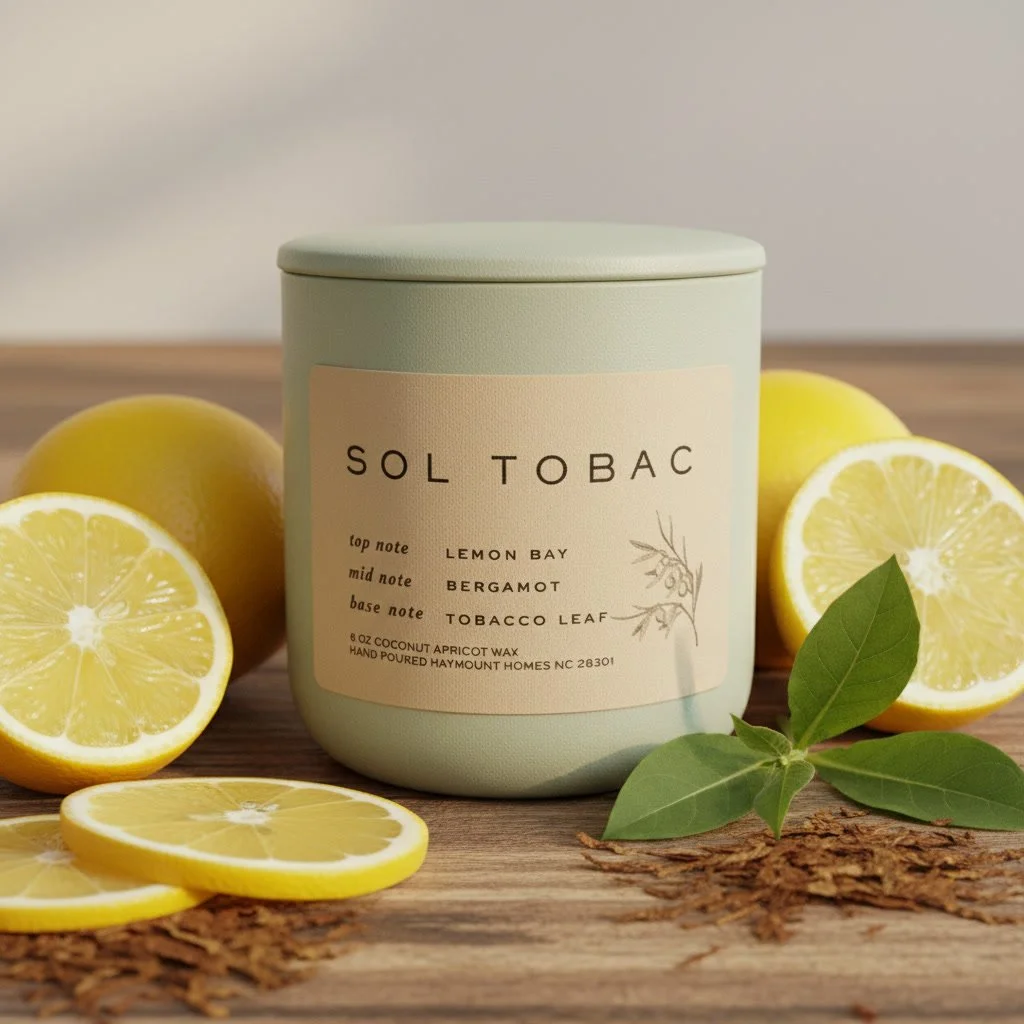
Coconut Apricot Wax vs Soy Wax Candles: Health, Performance, and Why It Matters
Coconut apricot wax outperforms soy: it burns cleaner with less soot and fewer airborne irritants; creates a stable melt pool and stronger, more consistent scent (hot and cold); bonds better with fragrance and essential oils for truer, longer-lasting aroma; and needs less wax for equivalent scent, burning more evenly and longer for better value. For cleaner air, stronger scent, and greater efficiency, choose coconut apricot wax.
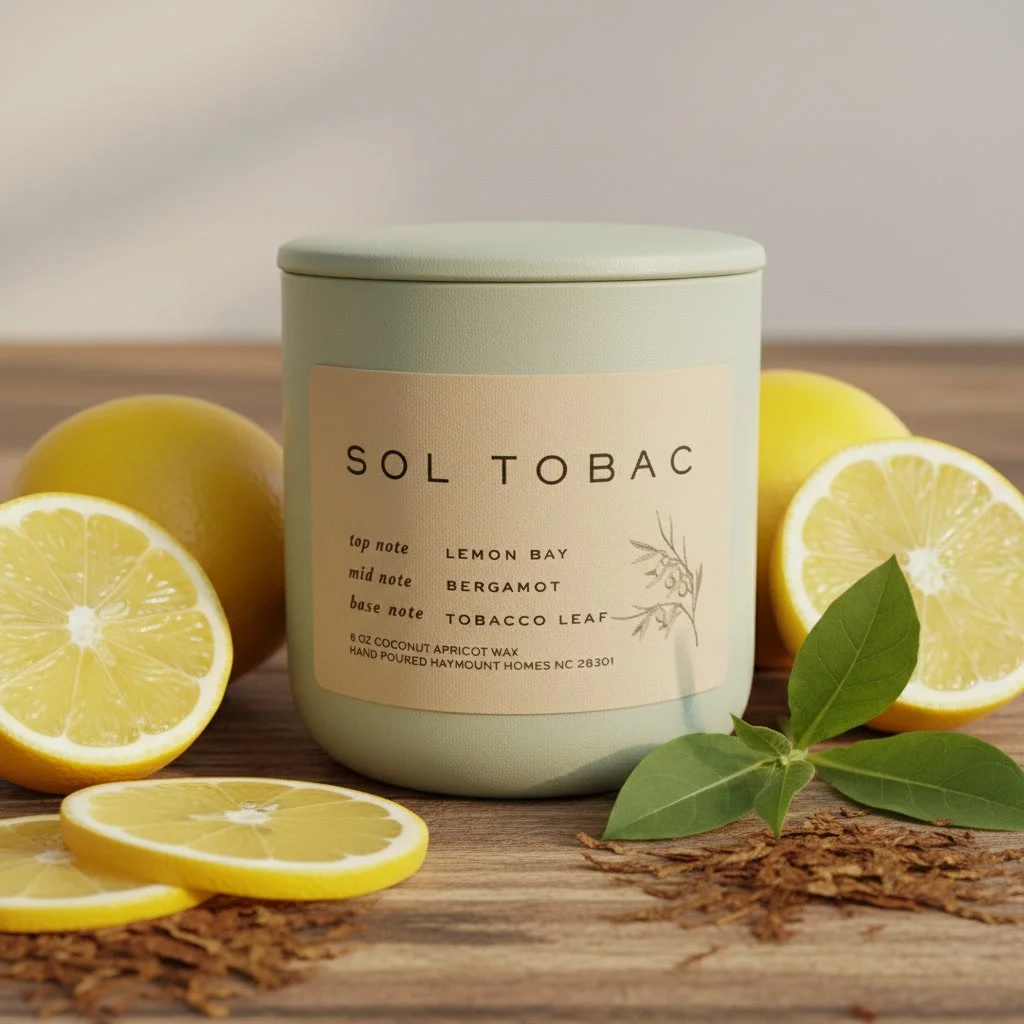
Haymount Homes Coconut Apricot Wax Sol Tobac Candle - Market Collection
In the world of artisanal candles, the type of wax you choose isn’t just a detail — it defines the entire experience: from how your candle smells, how cleanly it burns, to how earth-friendly it really is. Two popular natural options are soy wax and coconut apricot wax. While both are plant-based alternatives to traditional paraffin, they perform very differently in real-world use.
What Is Coconut Apricot Wax?
Coconut apricot wax is a blend of renewable plant oils — primarily coconut and apricot kernel. It’s soft, creamy, and designed for premium candle performance.
Compared to standard soy wax, coconut apricot wax often:
Holds more fragrance, creating richer, fuller scent throughout a burn.
Melts more evenly and slowly, leading to longer burn times and better scent distribution.
Produces a cleaner, more stable flame with minimal soot or tunneling.
Creates a smooth, luxurious finish in the jar that stays beautiful before and after burning.
This combination of qualities makes coconut apricot wax ideal for candle lovers who want a strong scent experience and elegant performance.
How Soy Wax Compares
Soy wax has long been beloved by candle makers for being natural, renewable, and often more affordable than premium waxes, but the label is not as squeaky clean as it appears.
But there are downsides that many makers and consumers notice:
Weaker scent throw — soy often doesn’t carry fragrance as powerfully, especially in larger spaces.
Uneven burning and tunneling — soy candles can develop tunnels or burn inconsistently unless meticulously wick-tested.
Cosmetic issues — soy wax can frost, crack, or form rough tops that affect aesthetics.
Environmental concerns — large-scale soybean cultivation has been linked to deforestation and intensive agriculture practices, including chemical toxins.
Some candle makers also point out that typical soy wax is hydrogenated and processed to behave like candle wax, which isn’t something everyone expects when they think “natural”. While soy itself doesn’t cause endocrine disruption directly, the agricultural chemicals used in conventional soybean farming — including herbicides like glyphosate and genetically modified crop systems — raise concerns for some health- and eco-conscious buyers. (This is a debated topic in the candle community, and definitive links between soy wax emissions and human hormone disruption are not established, but the wider discussion about crop chemicals persists.)
Health & Indoor Air Quality
One of the biggest reasons people choose plant-based waxes is indoor air quality. Both soy and coconut apricot waxes burn cleaner than traditional paraffin, which can emit benzene and toluene — known carcinogens.
But coconut apricot wax often gets the edge because:
It creates a more even burn pool, reducing incomplete combustion and soot.
Its lower melt temperature helps fragrance oils disperse steadily without needing heavy additives.
These attributes combine to make your candle experience not just more fragrant, but healthier for your home environment.
Final Takeaways
Choosing between soy and coconut apricot wax ultimately comes down to your priorities as a maker or candle lover. If what matters most to you is maximum fragrance, healthy environment, a slow and even burn, and a luxury experience, coconut apricot wax delivers performance that many soy candles simply can’t match.
If affordability and accessibility are your top concerns, soy is your next best choice - but it does not receive the same health grade; be mindful of its limitations in scent, health and burn quality.
At the end of the day, understanding what’s in your candle — and how it behaves — empowers you to make the healthiest, most satisfying choice for your space.
We choose to offer only coconut apricot wax candles because your health and the well-being of our planet are of top priority.